When we talk about quality of life in our golden years, independence often tops the list—but maintaining it isn’t always straightforward. This is where ADL assistance steps in as more than just a caregiving buzzword. At Bright Hope Adult Family Home, ADL assistance forms the cornerstone of daily operations, ensuring seniors not only remain safe but also retain their dignity and autonomy. Yet many families are unsure what this term actually covers. Is it simply help with bathing? Does it include medication reminders? And how do caregivers strike that delicate balance between offering support and encouraging independence? Understanding the full scope of Activities of Daily Living (ADL) support can transform how you approach senior care, helping you choose the right environment for your loved one—whether that’s at home or in a specialized residential setting like Bright Hope Adult Family Home.
What Exactly Are ADLs?
Medical and geriatric professionals divide daily tasks into two categories: Activities of Daily Living (ADLs) and Instrumental Activities of Daily Living (IADLs). ADLs refer to the fundamental self-care tasks we all perform every day, often without conscious thought—walking, eating, toileting, bathing, dressing, and transferring from bed to chair. IADLs are more complex tasks such as managing finances, preparing meals, shopping, and handling transportation. While both are essential, ADL assistance focuses on the non-negotiable basics. Without help in these areas, a senior’s health and safety are immediately at risk. The goal of ADL support is not to replace a person’s ability but to supplement it, ensuring tasks are completed safely while preserving as much independence as possible.
Personal Hygiene and Grooming: Beyond the Surface
For many seniors, the inability to bathe independently is the first sign that additional support is needed. What appears to be stubbornness or withdrawal often stems from fear—fear of slipping on a wet floor, of being unable to get out of the tub, or of the sheer exhaustion a shower can cause. ADL assistance at Bright Hope Adult Family Home includes hands-on help with bathing, oral care, hair washing, shaving, and nail care. Caregivers are trained to approach these intimate tasks with gentleness and respect, using techniques that maximize the senior’s participation. For example, a caregiver might hand the washcloth to the resident and guide their hand, rather than simply taking over. This preserves the senior’s sense of agency while ensuring cleanliness, which is critical for preventing skin breakdown and infections.
Dressing with Dignity
Dressing may seem simple, but it involves fine motor skills, balance, sequencing, and decision-making—all of which can decline with conditions like arthritis, stroke, or dementia. ADL assistance in this area includes selecting weather-appropriate clothing, fastening buttons or zippers, managing braces or compression stockings, and ensuring the senior feels good about their appearance. At Bright Hope Adult Family Home, caregivers recognize that clothing is tied to identity. A woman who wore floral prints her entire life shouldn’t be relegated to generic sweatpants simply because it’s easier for staff. By offering choices and allowing extra time, caregivers support both physical needs and emotional well-being.
Toileting and Continence Care
This is often the most sensitive ADL—and the one families struggle to discuss. Yet continence issues are among the top reasons seniors transition to assisted living or adult family homes. ADL assistance includes scheduled bathroom reminders, help with transferring onto the toilet, perineal care, and management of incontinence products. Left unaddressed, toileting difficulties lead to urinary tract infections, skin rashes, falls, and social isolation. Professional caregivers approach this task matter-of-factly, without judgment, prioritizing the senior’s comfort and privacy. Many families are surprised to learn that proper continence support often reduces “accidents” significantly, because the senior isn’t waiting too long or struggling alone.
Mobility and Transferring
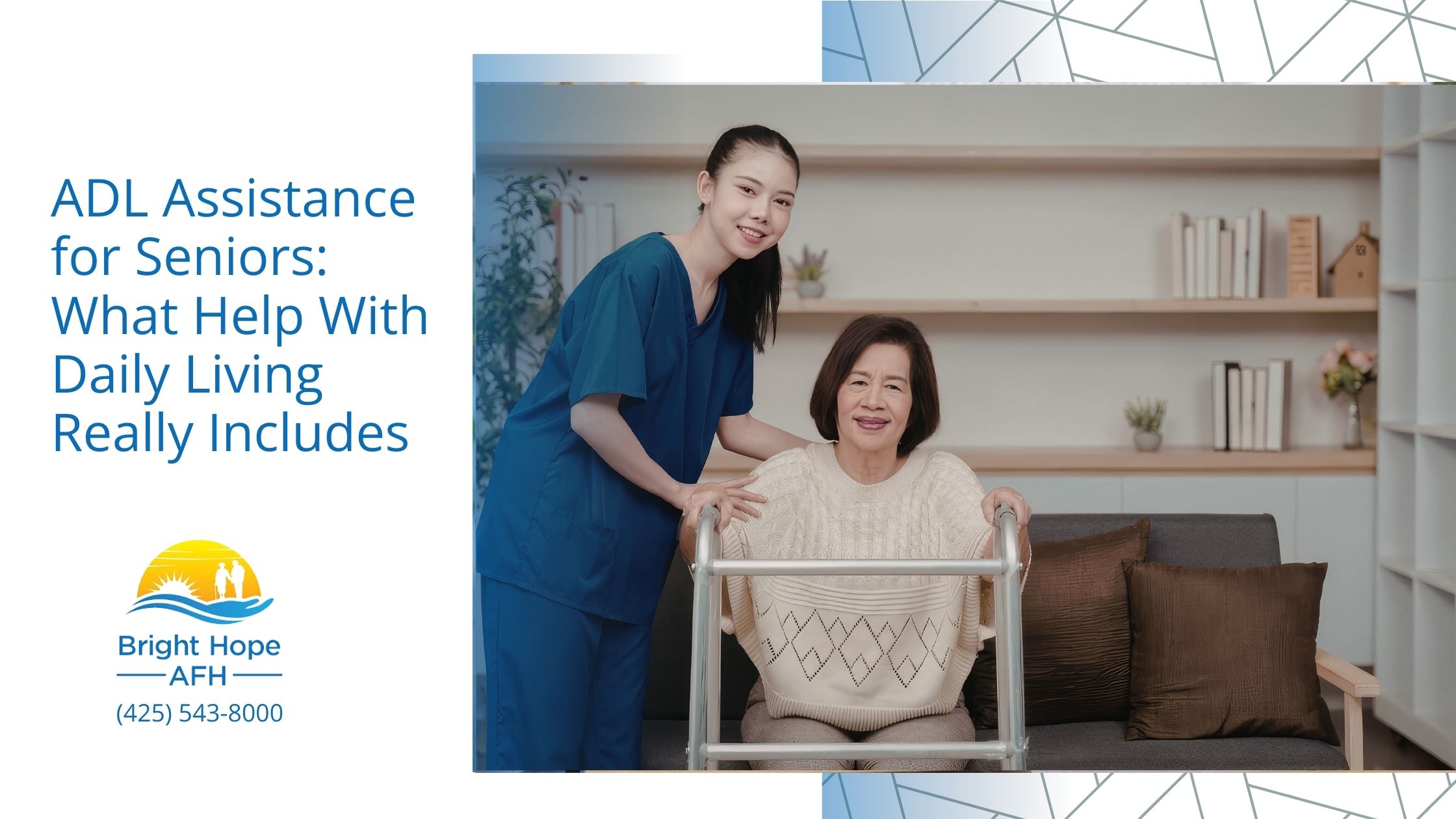
Falls are the leading cause of fatal and non-fatal injuries among older adults. ADL assistance for mobility isn’t just about having an arm to lean on; it’s about proper body mechanics, use of assistive devices, and environmental setup. At Bright Hope Adult Family Home, caregivers are trained to assist seniors with moving from bed to wheelchair, from chair to toilet, and throughout the common areas. This includes adjusting walkers or canes to the correct height, ensuring pathways are clear, and using gait belts when needed. Crucially, good ADL support encourages movement rather than immobilizing seniors “for their own good.” Regular, assisted ambulation preserves muscle strength and cardiovascular health, directly impacting longevity.
Eating and Nutritional Support
Mealtime is both a biological necessity and a social experience. ADL assistance in this domain ranges from setting up utensils and opening cartons to full feeding assistance for those with advanced dementia or physical limitations. Caregivers also monitor for swallowing difficulties (dysphagia) and adjust food textures accordingly—chopped, pureed, or thickened liquids—to prevent aspiration pneumonia. Beyond the mechanics, Bright Hope Adult Family Home emphasizes the social aspect of dining. Residents eat together in a family-style setting, which stimulates appetite and combats loneliness. A senior who refuses to eat alone in their own home may happily consume a balanced meal when seated with others.
The Link Between ADLs and Cognitive Decline
It is impossible to discuss ADL assistance without addressing dementia. Alzheimer’s disease and other dementias progressively erode a person’s ability to sequence tasks. A person may remember they need to brush their teeth but cannot figure out how to turn on the faucet or squeeze the toothpaste. Skilled ADL assistance uses techniques like “hand-over-hand” guidance, breaking tasks into single steps, and minimizing distractions. The environment itself becomes a tool—clear labels, contrasting colors on bathroom fixtures, and familiar objects all cue the resident toward independence. Bright Hope Adult Family Home designs its approach around each resident’s cognitive baseline, adapting as the disease progresses while always focusing on retained abilities rather than losses.
According to the National Institute on Aging, understanding the difference between age-related changes and signs of dementia is critical for families seeking appropriate ADL support. Early intervention can delay functional decline and improve quality of life.
Instrumental ADLs: The Overlooked Layer
While the six primary ADLs are non-negotiable, truly comprehensive care also addresses Instrumental Activities of Daily Living. At Bright Hope Adult Family Home, this means medication management—not just reminding someone to take a pill, but ordering refills, tracking controlled substances, and monitoring for side effects. It includes laundry and housekeeping, which directly impact health through clean clothing and reduced allergens. Transportation to medical appointments is another vital service; a senior who cannot drive may skip checkups or pharmacy visits, leading to preventable emergencies.
For those interested in how we tailor these services to individual needs, we invite you to visit our Services and Support page for a detailed breakdown of our care levels and staffing ratios.
Emotional and Psychological Components
What often gets lost in clinical discussions of ADL assistance is the emotional weight of receiving help. Accepting that you can no longer bathe yourself or prepare your own meals involves a profound identity shift. Seniors may grieve their lost independence and resist help out of pride or fear. Exceptional ADL assistance addresses this through relationship-building. When the same caregiver assists a resident day after day, trust develops. The senior learns that accepting help with buttons doesn’t mean losing their voice in other decisions. Bright Hope Adult Family Home emphasizes continuity of staffing specifically for this reason; it transforms care from a series of tasks into genuine relationship.
Choosing the Right ADL Support Model
Families often wonder whether home health aides, assisted living, or adult family homes are the best fit. Home care allows seniors to remain in familiar surroundings but may lack 24/7 availability and social engagement. Larger assisted living communities offer amenities but can feel impersonal. Adult family homes like Bright Hope Adult Family Home occupy a middle ground—professional oversight within a residential setting, typically with a higher caregiver-to-resident ratio. This model is particularly effective for seniors who need moderate to high ADL assistance but do not require skilled nursing. The small scale means caregivers truly know each resident’s preferences: which side of the bed they prefer to exit from, how they take their coffee, and what music soothes them during evening care.
Conclusion
ADL assistance is far more than a checklist of tasks. It is the framework that allows seniors to live with safety, comfort, and self-respect when age or illness has chipped away at their capabilities. From the intimacy of bathing support to the quiet reassurance of a caregiver’s hand during a nighttime transfer, these interventions prevent hospitalizations, extend independence, and communicate to seniors that they are not a burden. At Bright Hope Adult Family Home, ADL assistance is delivered with the understanding that behind every task is a person with a lifetime of habits, preferences, and pride. For families navigating this journey, the goal is not to find care that does everything for their loved one—but care that does the right things, in the right way, at the right time.