As we age, maintaining independence often hinges on one critical factor: the ability to move safely and confidently. For seniors and their caregivers, navigating daily life can become a challenge when balance declines, muscles weaken, or chronic conditions limit mobility. That is where professional mobility assistance becomes not just a convenience, but a lifeline. At Bright Hope Adult Family Home, we specialize in compassionate, person-centered care that helps seniors preserve their dignity while reducing the risk of falls and injuries. In this post, we’ll explore three essential pillars of senior mobility support—safer transfers, walking assistance, and wheelchair help—and explain how our approach at Bright Hope makes a meaningful difference for families across our community.
Why Mobility Assistance Matters
The statistics are sobering: according to the Centers for Disease Control and Prevention, one in four Americans aged 65 and older falls each year, and falls are the leading cause of fatal and nonfatal injuries among older adults. Yet many of these incidents are preventable with the right support systems in place. Mobility assistance encompasses far more than just physical help—it involves proper technique, appropriate equipment, environmental modifications, and emotional reassurance. When delivered skillfully, it allows seniors to remain active, engaged, and as autonomous as possible.
At Bright Hope Adult Family Home, we view mobility assistance as a cornerstone of holistic care. Our trained staff members are well-versed in safe transfer techniques, gait training, and wheelchair management. But beyond the technical skills, we build trusting relationships that help seniors feel secure rather than dependent. Whether your loved one needs a steady arm during an evening stroll or full support for bed-to-chair transfers, our team is prepared to meet those needs with patience and respect.
Safer Transfers: Protecting Both Senior and Caregiver
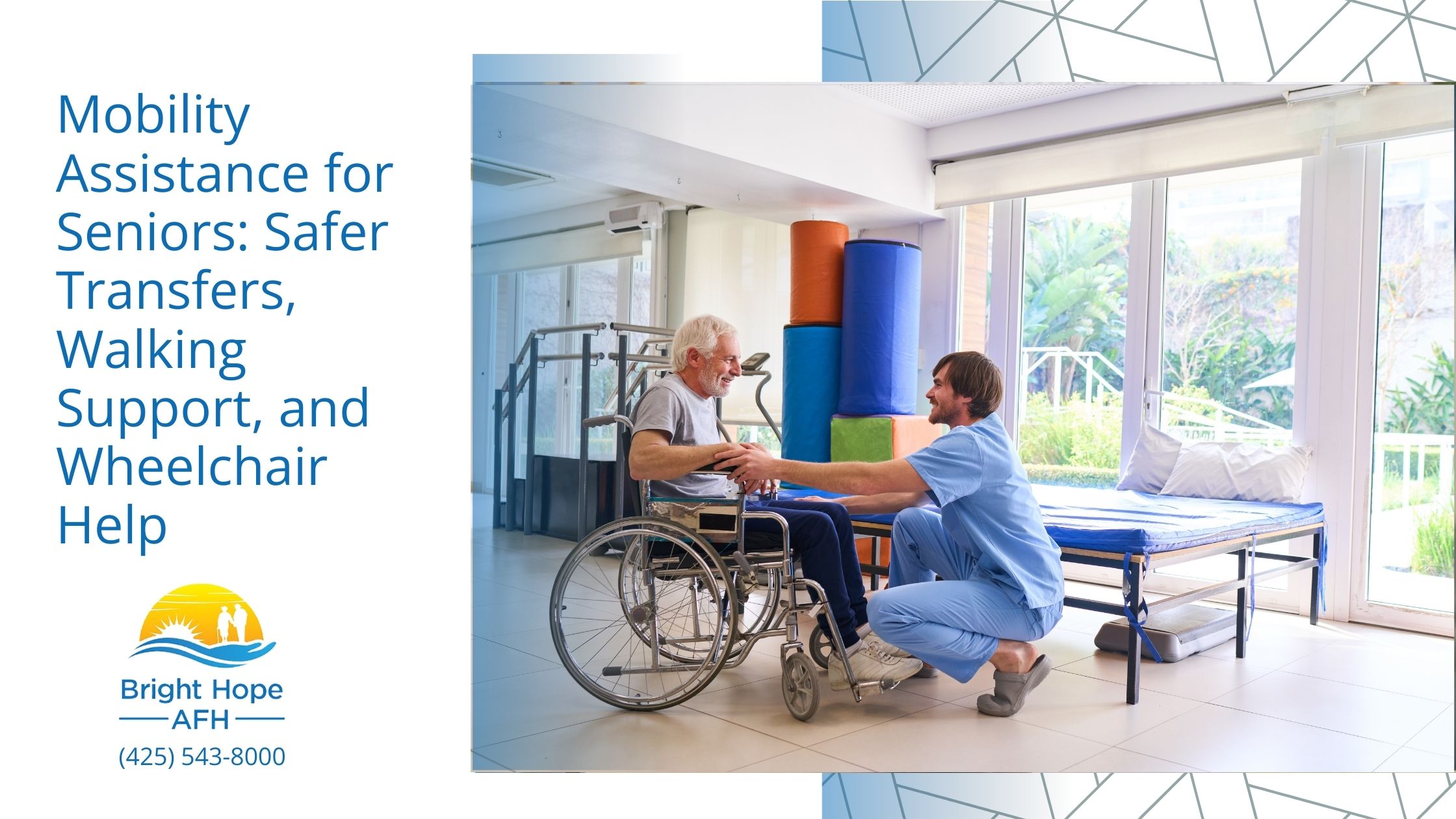
Transfers—moving from one surface to another, such as from bed to wheelchair or toilet to chair—are among the highest-risk activities for both seniors and caregivers. Poor technique can lead to falls, skin tears, or musculoskeletal injuries for the person providing care. This is why transfer safety is a core component of our training at Bright Hope.
Proper transfer technique begins with an assessment. Does the senior bear weight? Can they pivot, or do they require a mechanical lift? We evaluate each resident’s strength, balance, and cognitive ability to determine the safest approach. For instance, a stand-and-pivot transfer may be appropriate for someone with moderate stability, while a full-sling ceiling lift might be necessary for a resident with advanced Parkinson’s disease.
We also emphasize the importance of body mechanics for caregivers. By keeping the spine neutral, bending at the knees, and staying close to the person, staff reduce their own injury risk while providing stable support. Additionally, we use adaptive equipment such as gait belts, transfer boards, and slide sheets to minimize friction and shearing forces. These tools, combined with clear verbal cues and unhurried pacing, turn what could be a stressful moment into a calm, predictable routine.
For families caring for a senior at home, learning proper transfer techniques is invaluable. The National Institute on Aging offers excellent resources on fall prevention and safe patient handling—a trustworthy outbound source we frequently recommend.
Walking Support: Encouraging Confidence and Endurance
Walking is not just transportation; it is exercise, fresh air, and social connection. Yet many seniors scale back their walking out of fear of falling, leading to a downward spiral of deconditioning and isolation. Walking support at Bright Hope Adult Family Home is designed to break that cycle.
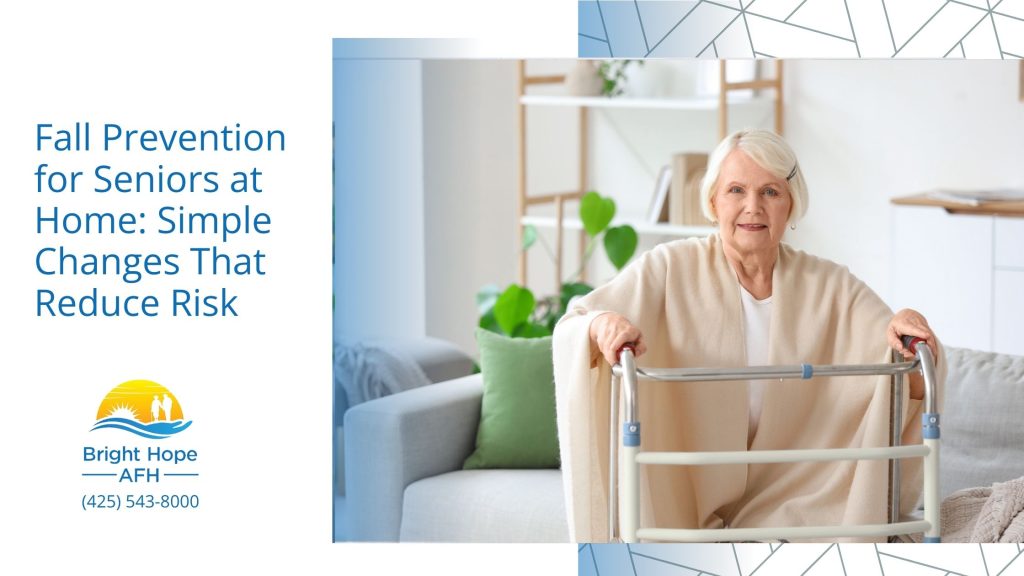
Our approach is individualized. For a resident with mild balance issues, a caregiver may provide standby assistance—remaining close enough to catch them if they wobble but allowing them to walk independently. For someone with more significant deficits, we might use a rolling walker with a seat, a hemi-walker, or a front-wheeled walker, adjusting the height for optimal posture. We also focus on environmental safety: clearing pathways, ensuring adequate lighting, and removing throw rugs that could cause trips.
But walking support is also motivational. We encourage residents to participate in gentle, structured walking programs that build endurance at a comfortable pace. A short stroll to the garden or around the common area can do wonders for circulation, mood, and sleep quality. Our staff celebrate small victories—a few extra steps, a steadier gait—because we know these moments add up to preserved independence.
Wheelchair Help: Beyond Just Pushing
For seniors who rely on wheelchairs full-time or part-time, quality of life depends heavily on how well that equipment is managed. Wheelchair help is far more complex than simply pushing from point A to point B. It involves proper positioning, pressure relief, navigation, and communication.
At Bright Hope, our wheelchair assistance begins with an ergonomic assessment. Is the cushion appropriate for pressure sore prevention? Are the footrests at the correct height? Does the resident need a custom back support or lateral trunk supports? We work with physical and occupational therapists to ensure each resident’s wheelchair configuration supports their comfort and function.
We also train staff in safe wheelchair handling: locking brakes during transfers, using anti-tippers on lightweight chairs, and managing curbs or uneven terrain with tilt-in-space features. Perhaps most importantly, we treat wheelchair mobility as a collaborative activity. Our caregivers are taught to walk alongside the resident, maintaining eye contact and conversation rather than speaking over their shoulder. This preserves the senior’s personhood and ensures they remain an active participant in their own movement.
For those who are new to wheelchair use, the adjustment can be emotional. We provide reassurance and, when possible, opportunities for self-propulsion to maintain upper body strength. Even residents with limited hand function can often maneuver a power chair with a joystick, restoring a degree of autonomy that profoundly affects their outlook.
Creating a Culture of Safety and Dignity
What sets Bright Hope Adult Family Home apart is our unwavering commitment to treating every resident as family. Mobility assistance is never rushed; it is woven into the natural flow of the day. A staff member helping a resident transfer from the dining table to a recliner does so with the same courtesy they would show their own parent. This culture of dignity reduces anxiety and fosters cooperation, which in turn makes transfers safer and more efficient.
We also recognize that family caregivers need support and education. Many adult children feel guilty or overwhelmed when they realize they cannot safely lift their parent alone. We encourage families to participate in care planning and offer guidance on how to choose the right senior living option when the demands of home care become unsustainable—an internal link to our services page provides further information.
Technology and Innovations in Senior Mobility
The field of senior mobility is constantly evolving. Lightweight wheelchairs, exoskeletons for gait rehabilitation, and smart walkers with fall-detection sensors are just a few examples of how technology is enhancing safety. While we remain grounded in high-touch, personalized care, Bright Hope stays informed about emerging tools that could benefit our residents.
For now, the most important “technology” remains the skilled, observant caregiver—someone who notices when a resident is having an off day, who remembers that arthritic hands need extra time to grip, who offers encouragement instead of impatience. That human connection is the heart of mobility assistance.
Conclusion: Moving Forward Together
Mobility is essential to well-being at every age. When seniors receive appropriate, respectful mobility assistance, they experience fewer falls, greater engagement, and a stronger sense of purpose. At Bright Hope Adult Family Home, we are proud to offer a safe, nurturing environment where residents can maintain their mobility to the fullest extent possible.
Whether your loved one requires occasional walking support, complete wheelchair assistance, or help mastering complex transfers, our team is ready to help. We invite you to visit us and see firsthand how our approach to care makes everyday movement safer and more dignified. After all, every step forward—no matter how small—is a step worth celebrating.