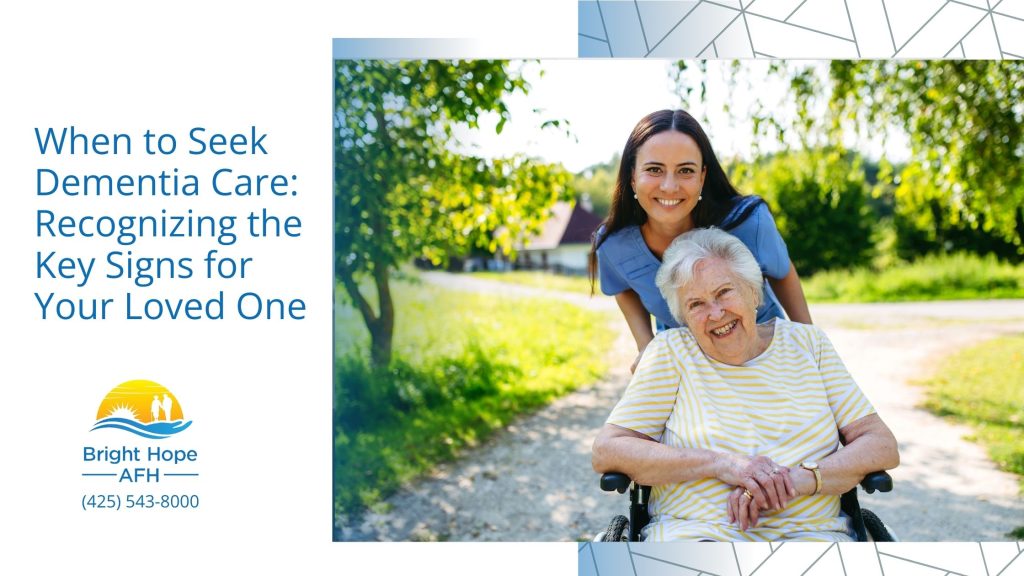
Watching an aging loved one experience changes in memory or behavior can be a source of deep concern and uncertainty for families. It’s often difficult to distinguish between normal age-related forgetfulness and something more significant. Understanding the early signs of dementia in seniors is the first, crucial step toward getting appropriate support and planning for a future filled with dignity and care. At Bright Hope Adult Family Home, we believe that compassionate, informed awareness empowers families to act with love and intention. This guide is designed to help you recognize subtle shifts that may indicate it’s time to seek a professional evaluation.
Beyond Forgetfulness: The Subtle Shifts to Notice
Dementia is an umbrella term for a decline in cognitive ability severe enough to interfere with daily life. Alzheimer’s disease is the most common type, but there are several others. The key is to look for a pattern of changes, not just an isolated incident.
- Memory Loss That Disrupts Daily Life: The most well-known sign isn’t just misplacing keys. It’s forgetting recently learned information, important dates or events, or repeatedly asking for the same information. A senior might rely heavily on memory aids or family members for things they used to handle on their own.
- Challenges in Planning or Problem-Solving: You might notice changes in the ability to develop and follow a plan, like a familiar recipe, or to work with numbers, like managing monthly bills. Concentration may become difficult, and tasks take much longer than before.
- Difficulty Completing Familiar Tasks: A loved one may have trouble driving to a familiar location, remembering the rules of a favorite game, or navigating the steps to use a microwave or television remote.
- Confusion with Time or Place: Losing track of dates, seasons, and the passage of time is common. Seniors may forget where they are or how they got there. They might also have trouble understanding something if it is not happening immediately.
- Trouble Understanding Visual Images and Spatial Relationships: For some, vision problems can be a sign. This can lead to difficulty with balance, trouble reading, or problems judging distance and determining color or contrast, which can pose driving risks. You can learn more about how a supportive environment is designed to mitigate these risks on our page about personalized care plans.
- New Problems with Words in Speaking or Writing: A person may have trouble following or joining a conversation. They may stop in the middle of a sentence and have no idea how to continue, or they may repeat themselves. They might struggle with vocabulary, calling things by the wrong name.
- Misplacing Things and Losing the Ability to Retrace Steps: We all misplace things, but a person with dementia may put things in unusual places (like putting a wallet in the freezer). They may lose things and be unable to go back over their steps to find them. Accusations of theft may sometimes follow.
- Decreased or Poor Judgment: This can manifest in many ways, from poor financial decisions (like giving large sums to telemarketers) to paying less attention to grooming or personal cleanliness.
- Withdrawal from Work or Social Activities: A senior may start to remove themselves from hobbies, social engagements, or work projects. This can be due to the changes they are experiencing or the fear of others “noticing.”
- Changes in Mood and Personality: They can become confused, suspicious, depressed, fearful, or anxious. They may be easily upset at home, with friends, or when out of their comfort zone.
What to Do If You Notice These Signs
First, take a deep breath. Observing these signs is not a diagnosis. Many treatable conditions, such as vitamin deficiencies, thyroid problems, or medication side effects, can mimic dementia. Your next step is to encourage a visit to a primary care physician or a neurologist for a comprehensive assessment. A full medical workup is essential.
How to Approach the Conversation
This can be delicate. Choose a quiet, private time and place. Use “I” statements expressing concern and love: “I’ve noticed you’ve seemed a bit frustrated with the bills lately, and I’m concerned. How would you feel about us talking to the doctor just for a check-up?” Focus on the goal of health and well-being, not on deficits.
The Role of Compassionate, Specialized Care
If a diagnosis is made, know that a path of support and meaningful life lies ahead. Early diagnosis allows for better management of symptoms, access to treatments that may slow progression, and more time to plan for the future. This is where a specialized residential community can provide immense relief and enhance quality of life.
At Bright Hope Adult Family Home, we specialize in providing a safe, nurturing, and engaging environment for seniors living with memory loss. Our approach is rooted in dignity, personalized attention, and creating moments of joy every day. We focus on what residents can do, fostering independence in a secure, homelike setting. Our team is specially trained to understand the complexities of dementia, using compassionate communication and proven strategies to reduce anxiety and confusion.
We encourage families to seek out reputable resources for ongoing education. A valuable external resource for understanding the different types of dementia and current research is the Alzheimer’s Association website.
Recognizing the early signs is an act of profound love. It opens the door to support, planning, and ensuring your loved one receives the compassionate, expert care they deserve. You are not alone on this journey.