anxiety management

Creating Calm: Effective Anxiety Management for Alzheimer’s Patients

Watching a loved one navigate the journey of Alzheimer’s disease is profoundly challenging. Beyond memory loss, one of the most distressing symptoms for both patients and caregivers is the anxiety and agitation that often accompany the condition. Effective anxiety management is therefore not a luxury but a cornerstone of compassionate care. It transforms the daily experience, creating islands of peace in a confusing world. At Bright Hope Adult Family Home, we believe that understanding and proactively addressing this anxiety is key to preserving dignity and enhancing quality of life.

Understanding the Roots of Anxiety

Anxiety in Alzheimer’s patients doesn’t arise in a vacuum. It’s often a direct response to a world that has become unpredictable and frightening. Cognitive decline impairs the brain’s ability to process information, recognize environments, and recall recent events. Imagine suddenly not knowing where you are, why you’re there, or who the people around you are. This profound disorientation is a fertile ground for fear. Common triggers include:

  • Unfamiliar or overstimulating environments (loud noises, crowds).
  • Difficulty communicating needs or understanding others.
  • Physical discomfort (pain, hunger, fatigue) that they cannot articulate.
  • Task failure, such as being unable to dress oneself.
  • Delusions or misinterpretations of reality.

Recognizing that anxiety is a symptom of the disease—not a deliberate behavior—is the first step toward empathy and effective intervention.

Building a Calm and Reassuring Environment

The physical and emotional environment is the most powerful tool for anxiety management. At Bright Hope Adult Family Home, we structure our care and surroundings to minimize stress and maximize comfort. Key strategies include:

  • Consistency is Key: Maintaining a predictable daily routine for meals, activities, and bedtime provides a reassuring structure. Familiar rhythms help counter the chaos of memory loss.
  • Creating a Safe Space: We design calm, uncluttered spaces. Soft lighting, familiar personal items, comfortable furniture, and access to secure outdoor areas like our garden patio can significantly lower agitation.
  • The Power of Soothing Senses: Engaging the senses in a positive way is remarkably effective. Playing gentle, familiar music, using aromatherapy with scents like lavender, offering soft textiles to touch, or providing simple, enjoyable snacks can redirect focus and soothe the nervous system.

Communication: The Bridge to Connection

When verbal abilities fade, how we communicate becomes even more critical. Our approach focuses on non-verbal cues and emotional reassurance:

  • Speak with Calm and Clarity: Use a gentle, respectful tone. Speak slowly, using simple words and short sentences. Maintain eye contact and a kind facial expression.
  • Listen with Your Heart: Often, the emotion behind the words matters more than the words themselves. Validate their feelings by saying, “I see this is upsetting you. I’m here with you.”
  • Use Reassuring Touch: A calm, steady hand on the shoulder or a gentle handhold can communicate safety and connection when words fail.

Meaningful Engagement and Purposeful Activity

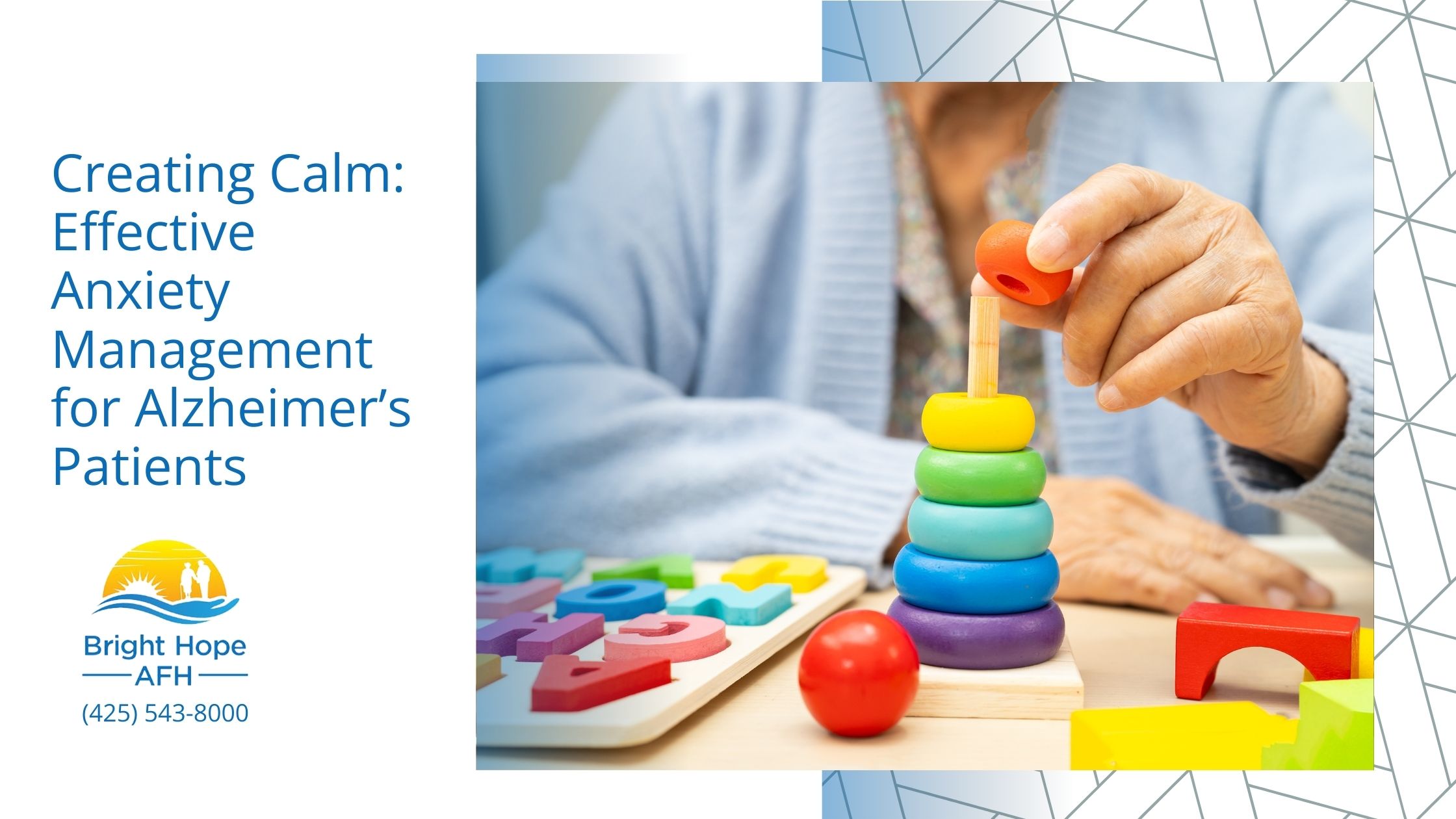
Anxiety can flourish in boredom or unspent energy. Providing simple, failure-free activities that connect to a person’s lifelong interests fosters a sense of purpose and accomplishment. This could be:

  • Folding laundry or sorting objects.
  • Looking through a photo album of familiar faces.
  • Listening to their favorite era of music.
  • Gentle rocking in a chair or a short, leisurely stroll.
    At Bright Hope, we personalize these engagements, understanding that a former gardener might find peace in potting a plant, while a homemaker may enjoy wiping a table. You can explore more about our philosophy on person-centered engagement in our article on Creating a Nurturing Daily Rhythm.

When to Seek Additional Support

While non-pharmacological strategies are always the first and best approach, there are times when anxiety is severe, persistent, and impairs safety or well-being. In these cases, it is crucial to consult with a healthcare professional. They can assess for underlying medical issues, such as infections or pain, and discuss if medication might be a helpful adjunct to other care strategies. For families seeking a deeper understanding of medication’s role, reputable resources like the Alzheimer’s Association provide balanced, evidence-based information.

A Commitment to Peaceful Living

Managing anxiety in Alzheimer’s is an ongoing, dynamic process of adaptation, patience, and profound love. It’s about entering their reality, offering reassurance, and crafting a world that feels less threatening. At Bright Hope Adult Family Home, our dedicated team is trained in these specialized techniques. We see it as our mission to create not just a place of safety, but a home filled with moments of calm, connection, and hope. By focusing on effective anxiety management, we help residents navigate their days with greater peace, allowing their true selves to shine through the fog of the disease.

Scroll to Top