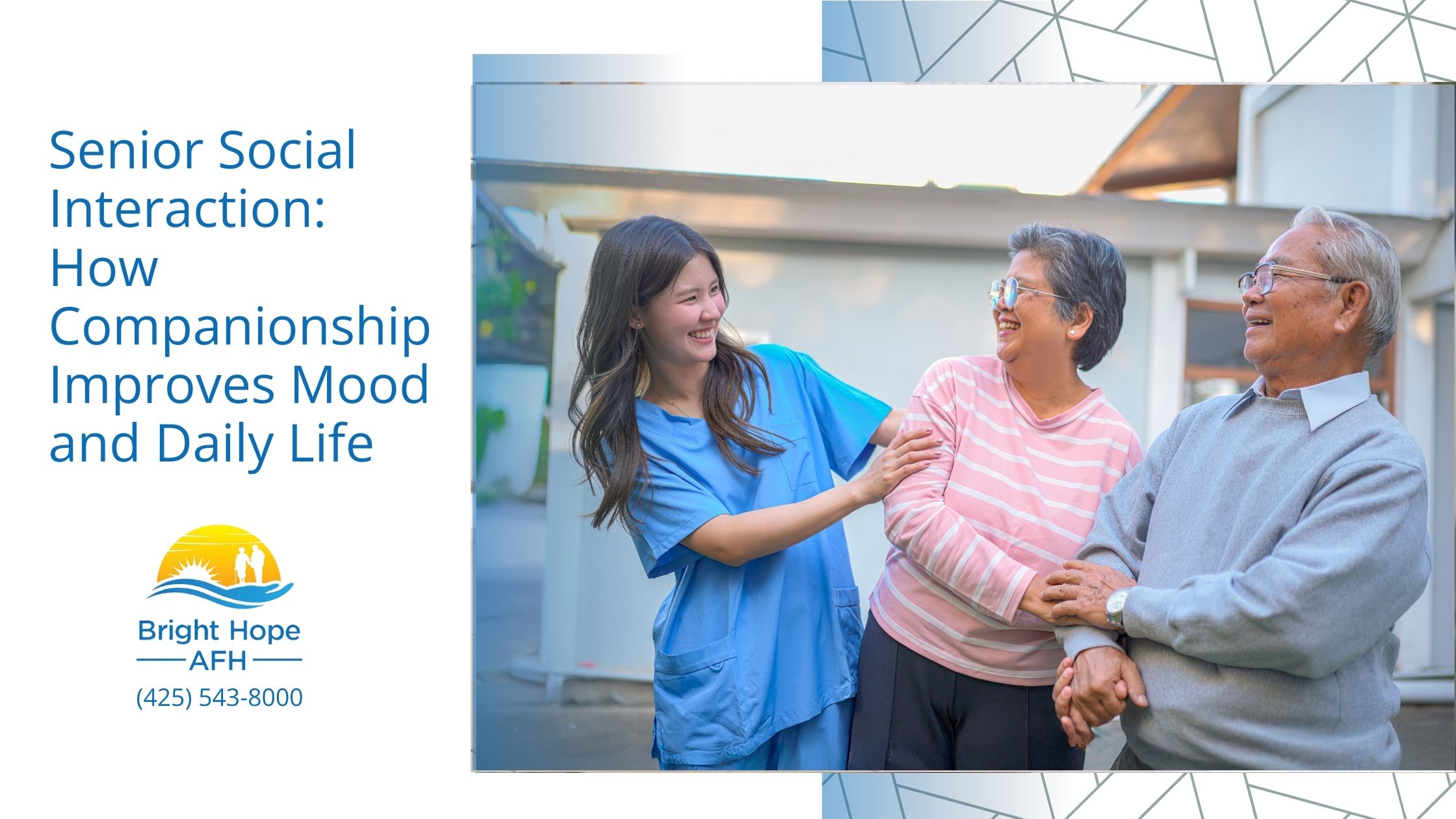
As we age, the circles we once moved through—busy workplaces, bustling school events, neighborhood gatherings—often begin to shrink. Retirement, health challenges, and the loss of loved ones can slowly erode daily contact with others. Yet one factor consistently rises to the top of healthy aging research: senior social interaction. When older adults engage regularly with peers, caregivers, and the community, the effects ripple far beyond simple conversation. At Bright Hope Adult Family Home, we have witnessed firsthand how purposeful companionship transforms not only mood but the entire rhythm of daily life.
The Quiet Epidemic of Loneliness
Before exploring the power of connection, it is important to understand what happens in its absence. Chronic loneliness in later years has been linked to a 50% increased risk of dementia, a 29% increased risk of heart disease, and rates of depression comparable to those seen in clinical populations. Social isolation, in fact, is now considered as detrimental to health as smoking fifteen cigarettes a day.
These statistics are sobering, but they also point toward a powerful solution. If isolation can accelerate decline, then meaningful engagement can slow—and in many cases, reverse—its effects. That is why Bright Hope Adult Family Home prioritizes not just physical care, but the emotional nourishment that comes from genuine human contact.
How Companionship Lifts Mood
The link between social interaction and emotional well-being is both psychological and biological. When we share a laugh, tell a story, or simply sit beside someone who listens, the brain releases oxytocin and endorphins—neurochemicals that reduce stress and create feelings of safety and pleasure. For seniors, these moments are not fleeting; they accumulate into a sustained sense of purpose.
Consider Ruth, an 84-year-old resident at Bright Hope. When she arrived, she rarely spoke and preferred to stay in her room. After consistent, gentle invitations to join group activities—morning coffee circles, trivia games, short walks—she began to open up. Within weeks, her posture changed. She started wearing brighter colors and initiated conversations at lunch. “I forgot what it felt like to be excited about the day,” she told us. Ruth’s story is not exceptional; it is the predictable outcome of intentional senior social interaction.
Structured companionship also provides cognitive stimulation. Reminiscing about the past exercises long‑term memory, while learning new names and navigating group conversations keeps the brain agile. Studies show that socially active seniors exhibit slower cognitive decline, even in the presence of age‑related brain changes.
Daily Life Reimagined Through Connection
Mood improvement is perhaps the most visible benefit, but companionship rewires daily existence in subtler, equally vital ways. When an older adult has someone to greet in the morning, meals become events rather than obligations. Exercise—often resisted when done alone—turns into a shared activity. Even household tasks like folding laundry or tending a small garden feel meaningful when done alongside another person.
At Bright Hope Adult Family Home, we design our environment to encourage these micro‑interactions. Common areas are arranged to invite sitting and talking. Staff members are trained not merely to assist, but to engage—to ask open‑ended questions, remember personal details, and celebrate small victories. The result is a culture where residents feel seen, not just cared for.
A 2021 study published in The Journals of Gerontology found that older adults who participated in regular social activities reported significantly lower levels of functional decline and higher life satisfaction than those who did not. The protective effect held true regardless of baseline health status. In other words, it is never too late to benefit from stronger social ties.
The Role of Family and Professional Caregivers
While peer friendships are invaluable, intergenerational connection adds another layer of richness. Many Bright Hope families visit frequently, and we encourage children and grandchildren to participate in activities. A toddler’s laughter, a teenager’s patient explanation of a smartphone—these exchanges bridge generational gaps and remind seniors that they remain relevant and loved.
Yet family members often carry guilt about not being able to visit daily. This is where professional adult family homes play a crucial role. By embedding companionship into the daily schedule, facilities like Bright Hope relieve families of the impossible expectation to be the sole source of social contact. Our caregivers are selected not only for clinical skills but for warmth, patience, and the ability to spark conversation.
To learn more about how we foster connection through personalized care, please visit our services page. Here you will find details about our activity programs, volunteer opportunities, and family engagement initiatives.
Overcoming Barriers to Senior Social Interaction
Despite the clear benefits, many older adults resist increased social contact. Common barriers include hearing loss, mobility limitations, and anxiety about being a burden. Others simply do not recognize their own loneliness—they have adjusted to solitude and no longer expect more.
Addressing these obstacles requires patience and creativity. At Bright Hope, we:
- Adapt communication. We use pocket amplifiers, written notes, and face‑to‑face positioning to include those with hearing challenges.
- Bring activities to residents. For those who cannot easily reach the common room, staff members bring puzzles, music, or simply a cup of tea to their bedside.
- Honor preferences. Not everyone enjoys large groups. One‑on‑one time—reading aloud, looking at photo albums, or walking the garden path—can be equally restorative.
We also respect that some seniors prefer solitude. The goal is not forced socialization, but available, low‑pressure opportunities. Choice itself is a form of dignity.
A Vision for Aging Well
The conversation around aging often centers on safety, medication, and physical decline. These are essential, but they do not define a life well lived. When we ask older adults what matters most to them, the answer rarely involves pills or procedures. They want to feel needed. They want to laugh. They want to know that someone will notice if they are absent from the breakfast table.
Senior social interaction is not a luxury or an add‑on to “real” care. It is the foundation upon which quality of life rests. At Bright Hope Adult Family Home, we have seen withdrawn individuals rediscover their sense of humor, anxious residents find calm in shared silence, and once‑isolated seniors become the welcoming committee for newcomers.
How You Can Help
If you have an aging parent, neighbor, or friend, small gestures can make a lasting difference. A five‑minute phone call, a postcard, an invitation to watch a television show together—these are not trivial. They signal that the person is remembered and valued.
For families considering long‑term care, we invite you to visit Bright Hope and observe the difference that intentional companionship makes. Speak with our residents. Ask about their day. You will see that our home is not merely a place to live, but a place to belong.
Bright Hope Adult Family Home believes that every senior deserves the warmth of daily connection. Through compassionate care and creative engagement, we help older adults not only age, but thrive. Contact us today to learn how we can support your loved one’s journey.